
The CERIC Method for Critically Reading Scientific Research
The CERIC Method is a structured framework for critically reading and evaluating scientific research. CERIC stands for Claim, Evidence, Reasoning, Implications, and Context, five elements that help readers assess how scientific arguments are built and how strongly their conclusions are supported.
Our comprehensive guide to the CERIC Method is now available from Cambridge University Press for students, educators, and researchers.
Order Now at Amazon → Learn More About The Book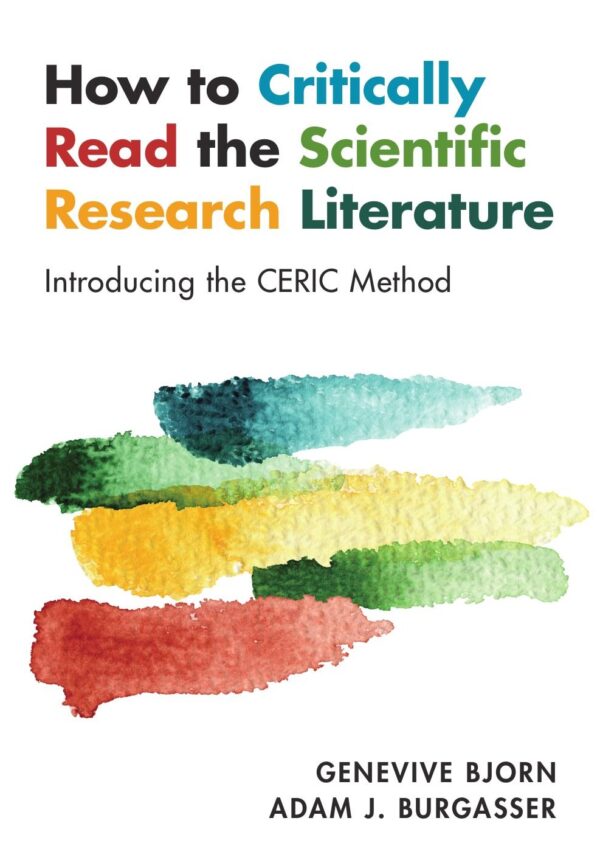
About the Authors
Meet the Authors
The CERIC Method was created by two educators who bring complementary expertise in learning research and scientific practice.

Genevive Bjorn, Ed.D.
Researcher, Author, and Director of the Nonprofit, Higher Learning Lab
I am an education researcher who studies how higher education shapes—and is shaped by—the evolving demands of the workforce, drawing on my doctoral research and years of teaching experience to investigate the links between learning, skills, and employment. My work focuses on making hidden curricula visible and teachable.

Adam Burgasser, Ph.D.
Professor of Astronomy & Astrophysics at UC San Diego
I am an observational astronomer who studies the coldest stars, brown dwarfs, and extrasolar planets. My research experience fuels a deep commitment to science education, and I integrate authentic scientific practices into course design and mentoring so learners can engage with data, inquiry, and discovery the way scientists do.
Five Elements. One Powerful Method.
The CERIC Method organizes critical reading around five elements: Claim, Evidence, Reasoning, Implications, and Context. Together, they provide a systematic approach to understanding and evaluating scientific arguments.
Evaluate Scientific Evidence in the Age of AI
AI can summarize a scientific paper, but evaluating whether its claims are actually supported still requires critical reading. The CERIC Method helps readers examine the Claim, Evidence, Reasoning, Implications, and Context behind scientific conclusions.
Your Learning Path
Four structured courses that build on each other — start free, progress to mastery, and finish with a certificate that you can proudly share.
Start free · No signupIntroduction to the CERIC Elements
Learn the foundations of the framework and start applying it to real research articles.
Use CERIC to Review and Compare Articles
Develop the skills to review, compare, and contrast research articles.
Use CERIC to Critique and Present Articles
Transform your article review and analysis into compelling presentations.
CERIC Foundations Program Capstone
Demonstrate your mastery with a capstone assessment leading to a certificate.
Get the Complete Bundle
All 4 Foundations courses for just $75 — save 50% vs. individual pricing
Get the Bundle →Bring CERIC to Your Program
We partner with professors and programs to develop custom workshops that transform how we teach students to engage with scientific literature.
Instructor Group Discount
Enrolling a class or cohort? Request a group discount code for your students and save on course access.
Why Adopt the CERIC Method?
The CERIC framework gives your students a structured, repeatable process for reading research papers — moving them from passive consumers to active, critical analysts of scientific literature.
Whether you teach upper-division undergraduates or work with graduate researchers, the method scales to any level and any STEM discipline.
Explore Workshops →Workshop Options
Newsletter
The Deep Reader
Deep reading, critical thinking, and what college is for in the AI age — a newsletter from Dr. Genevive Bjorn, delivered to your inbox.
Subscribe to The Deep Reader →